
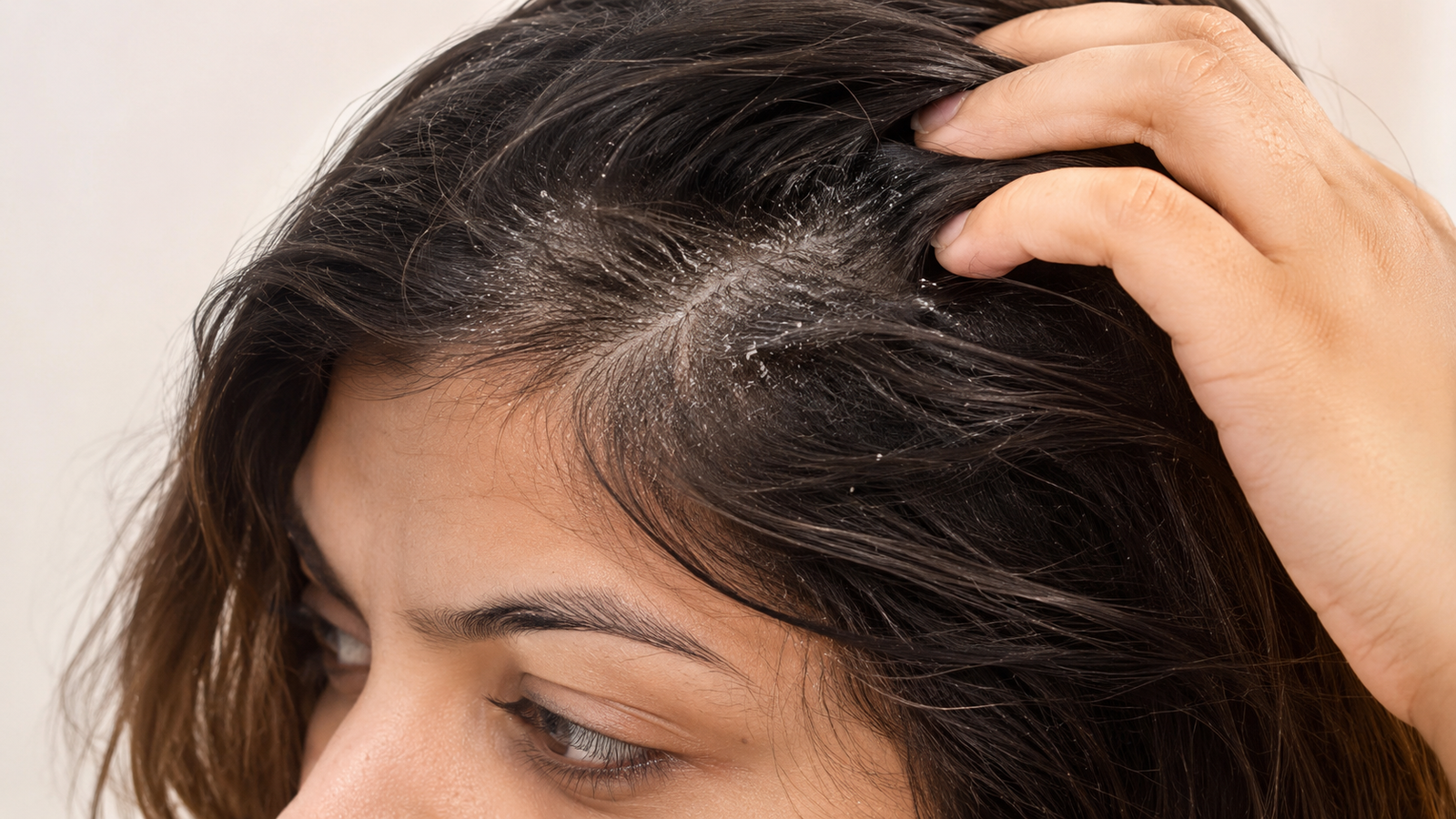




Winter may be easier on your skin in some ways, but your scalp doesn’t always enjoy the change in weather. If you have started noticing white flakes on your shoulders, an itchy scalp or persistent dryness, you might be tempted to blame it on the cold. However, not every flaky scalp is simply dry, and treating all types of flaking as dandruff can mean overlooking an underlying skin condition such as seborrheic dermatitis. Understanding the difference is important because each condition requires a different approach to care.
At Aarna Clinic, Jayanagar, Bengaluru, Dr. Pavithra H.N., Dermatologist, Trichologist and Hair Transplant Surgeon, consults patients with various hair and scalp concerns, including dandruff, itching and persistent scalp irritation. If you are considering dandruff treatment in Jayanagar Bengaluru or looking for a dermatologist in Jayanagar Bengaluru, knowing what is causing those flakes is the first step towards choosing the right treatment.
Why Does Dandruff and Dry Scalp Become More Noticeable During Winter?
Cold weather and reduced humidity can affect the scalp’s natural moisture balance. Indoor heating, frequent hot showers and changes in hair-washing habits may further contribute to dryness and irritation.
Winter can also aggravate existing dandruff and seborrheic dermatitis. Changes in weather, stress and individual skin sensitivity can influence how frequently these conditions flare up.
However, dryness and dandruff are not interchangeable terms. A dry scalp generally results from moisture loss, whereas dandruff is associated with increased skin flaking and may involve excess oil and a naturally occurring yeast called Malassezia. Seborrheic dermatitis is an inflammatory condition that can cause more persistent scaling and irritation.
Identifying the underlying cause helps determine whether your scalp needs additional moisture, a medicated shampoo or dermatologist-guided treatment.
Dry Scalp vs Dandruff vs Seborrheic Dermatitis: How Are They Different?
Although these three conditions can produce similar symptoms, certain characteristics can help distinguish them.
1. Dry Scalp: When Your Scalp Needs Moisture
A dry scalp develops when the skin loses moisture, often because of environmental conditions or irritating hair-care products.
Common signs include:
- Small, fine, white flakes that fall easily from the scalp.
- A tight or uncomfortable sensation.
- Mild itching without significant inflammation.
- Dryness that becomes more noticeable after washing.
- Hair and scalp that may feel generally dry.
Dry scalp is often manageable with gentle hair-care practices and suitable moisturising products. Switching to a mild shampoo and avoiding excessively hot water may help improve comfort.
2. Ordinary Dandruff: More Than Just Dry Skin
Dandruff is a common scalp condition characterised by visible flakes and itching. It is not necessarily caused by poor hygiene. Factors such as scalp oil production, individual sensitivity to Malassezia yeast and skin-cell turnover can contribute to its development.
Typical signs include:
- White or slightly yellowish flakes in the hair.
- Visible flakes on clothing, particularly around the shoulders.
- Mild to moderate itching.
- Recurring flaking despite regular hair washing.
- A scalp that may feel oily rather than dry.
Unlike simple dry scalp, dandruff may require an anti-dandruff shampoo containing ingredients that help control flaking and the underlying scalp factors.
3. Seborrheic Dermatitis: When Flaking Comes With Inflammation
Seborrheic dermatitis is a chronic inflammatory skin condition that commonly affects areas with a higher concentration of oil glands, including the scalp, eyebrows, sides of the nose and areas around the ears.
Its symptoms can be more persistent than those of ordinary dandruff.
Look out for:
- Greasy, yellowish or white scales.
- Persistent itching and scalp irritation.
- Redness or changes in skin colour around affected areas.
- Thick or adherent patches of scaling.
- Flaking that may also appear around the eyebrows, ears or sides of the nose.
Seborrheic dermatitis can occur in recurring episodes, with symptoms improving and returning over time. It is not contagious, but untreated inflammation can cause considerable discomfort.
When Should You Suspect Seborrheic Dermatitis Instead of Ordinary Dandruff?
The presence of flakes alone cannot establish whether someone has seborrheic dermatitis. However, certain patterns may suggest that the condition requires a closer examination.
Consider consulting a dermatologist if:
- Flaking continues despite using an appropriate anti-dandruff shampoo.
- Your scalp frequently becomes itchy, irritated or inflamed.
- You notice greasy scales or thick patches rather than loose, fine flakes.
- Similar scaling develops around your eyebrows, ears or nose.
- Symptoms repeatedly return after temporary improvement.
- Your scalp develops painful areas, crusting or swelling.
Persistent scalp symptoms should not automatically be attributed to dandruff. Conditions such as scalp psoriasis, eczema and fungal infections can sometimes produce similar signs and require different treatments.
What Are the Treatment Options for Winter Dandruff and Dry Scalp?
Treatment depends on the underlying cause, severity of symptoms and individual scalp condition. There is no single shampoo or treatment that works equally well for everyone.
Gentle Hair Care for Dry Scalp
If dryness is the primary concern, a dermatologist may recommend:
- Using a mild, gentle shampoo.
- Avoiding excessively hot showers.
- Choosing suitable scalp-friendly moisturising products.
- Reducing the use of harsh styling products.
- Avoiding frequent scratching or aggressive scalp scrubbing.
These measures help reduce irritation and support the scalp’s natural moisture balance.
Medicated Shampoos for Dandruff
Anti-dandruff shampoos may contain active ingredients such as ketoconazole, selenium sulphide, salicylic acid or zinc pyrithione, depending on the formulation and availability.
These ingredients work differently. Some help control yeast, while others reduce scaling and loosen accumulated flakes.
The frequency of use and duration of application should follow the product instructions or a dermatologist’s recommendation.
Dermatologist-Guided Treatment for Seborrheic Dermatitis
Seborrheic dermatitis may require a more targeted treatment approach. Depending on the severity, a dermatologist may recommend medicated shampoos, topical antifungal preparations or short-term anti-inflammatory medication.
Treatment aims to control inflammation, reduce scaling and itching, and minimise recurring flare-ups. Since the condition can return, some individuals may also require a maintenance routine after their symptoms improve.
Winter Scalp Care: Habits That Can Help Prevent Flare-Ups
Alongside appropriate treatment, a few everyday habits can help maintain scalp comfort during colder months.
- Avoid very hot water – Hot showers can strip away natural oils and aggravate dryness.
- Choose suitable hair-care products – Avoid harsh cleansers and irritating formulations.
- Maintain a consistent washing routine – Adjust shampoo frequency according to your scalp type and dermatologist’s advice.
- Avoid scratching – Repeated scratching can damage the scalp and worsen irritation.
- Manage stress – Stress can contribute to flare-ups in people prone to seborrheic dermatitis.
- Avoid excessive product build-up – Heavy styling products may irritate sensitive scalps in some individuals.
Remember that applying more oil is not necessarily the solution to every flaky scalp. If the underlying issue is seborrheic dermatitis, an oily product may not address the cause of the inflammation.
Get the Right Diagnosis for Your Scalp Concerns at Aarna Clinic, Jayanagar
Winter dandruff and dry scalp may appear similar, but the difference between simple moisture loss, ordinary dandruff and seborrheic dermatitis matters when choosing an effective treatment. Repeatedly changing shampoos or trying home remedies without understanding the underlying cause may delay appropriate care.
At Aarna Clinic, Jayanagar, Bengaluru, Dr. Pavithra H.N. provides dermatological consultations for individuals experiencing dandruff, scalp dryness, itching and other hair and scalp concerns. An assessment can help identify the possible cause of your symptoms and determine an appropriate treatment plan.
If persistent flakes, itching or scalp irritation are affecting your comfort, consider booking an appointment at Aarna Clinic for dandruff treatment or dry scalp treatment. Consulting a dermatologist in Jayanagar Bengaluru can help you address the actual cause of your scalp concerns rather than simply managing the visible flakes.
FAQs About Winter Dandruff & Dry Scalp
Is winter dandruff contagious?
No. Dandruff and seborrheic dermatitis are not contagious conditions. They cannot spread through sharing combs, towels, pillows or other personal belongings.
Can dandruff cause hair loss?
Dandruff itself does not usually cause permanent hair loss. However, persistent itching and vigorous scratching can damage hair strands and contribute to temporary hair shedding or breakage.
Can I apply coconut oil to my scalp if I have dandruff?
Coconut oil may help soften dry hair, but it is not an established treatment for dandruff or seborrheic dermatitis. Heavy oil application may also aggravate symptoms in some individuals.
Does dandruff indicate poor scalp hygiene?
No. Dandruff is not necessarily associated with inadequate hygiene. It can develop due to scalp oil production, individual skin sensitivity and the activity of naturally occurring microorganisms.
Can stress make dandruff worse?
Yes. Stress may aggravate dandruff and trigger flare-ups of seborrheic dermatitis in susceptible individuals. Maintaining healthy sleep habits and managing stress may support overall scalp health.
Can hair colouring or chemical treatments worsen scalp flaking?
Yes. Hair dyes, bleaching agents and certain chemical treatments can irritate the scalp or trigger contact dermatitis. People with sensitive scalps should discuss potential reactions and precautions before undergoing these treatments.
Can dandruff develop in people with dry hair?
Yes. Hair texture and scalp condition are different things. Someone with dry hair can still experience dandruff because the condition is influenced by several scalp-related factors.
Can dandruff develop even if I wash my hair regularly?
Yes. Regular hair washing does not completely prevent dandruff. Its development involves several factors, including scalp oil production, yeast activity and individual sensitivity. Washing habits alone do not determine whether someone develops dandruff.