
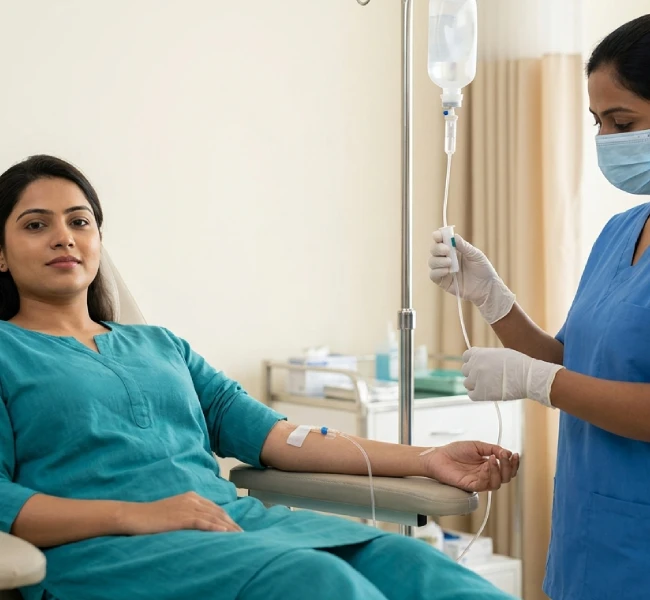
What Is IV Drip Treatment?
IV stands for intravenous, meaning that fluids or other prescribed substances are administered directly into a vein through a small catheter.
Depending on the formulation and purpose, an IV infusion may contain fluids, electrolytes, vitamins, minerals or other medically appropriate ingredients. The exact composition should be selected by a qualified healthcare professional after considering the person’s health, medications, nutritional requirements and treatment goals.
One of the primary advantages of intravenous administration is that the administered substance enters the bloodstream directly. This can be particularly useful when rapid fluid replacement or a specific nutrient needs to be delivered intravenously.
Why Do People Consider IV Drip Therapy?
People may explore IV therapy for different reasons, depending on the formulation being considered.
Common reasons include:
- Hydration and fluid replenishment
- Nutrient replacement when clinically appropriate
- Supporting treatment of certain deficiencies
- Recovery after periods of poor intake or dehydration
- Aesthetic and skin-focused wellness goals
- General wellness under medical supervision
What Are the Potential Benefits of IV Drip Treatment?
The benefits of IV therapy should be understood in the context of the specific formulation rather than as a universal effect of receiving an IV.
Rapid Fluid Delivery
When a person requires fluid replacement, intravenous fluids can deliver hydration directly into the circulation. This is one of the better-established uses of IV therapy.
Nutrient Replenishment
Certain nutrients can be administered intravenously when there is a medical reason to do so, particularly when oral intake or absorption is inadequate.
Direct Delivery
Because the digestive tract is bypassed, the administered contents reach the bloodstream directly. This makes intravenous administration useful in situations where a specific substance needs to be delivered through a controlled route.
Support for Specific Deficiencies
IV administration may have a role when a documented deficiency or medical condition makes intravenous supplementation appropriate. It should not, however, be assumed that everyone benefits from high-dose vitamin administration simply because the nutrients are essential.
Aesthetic and Wellness Applications
Some clinics offer nutrient-based drips with formulations marketed around skin appearance, antioxidant support or general wellness. These uses should be discussed with realistic expectations because evidence for broad aesthetic or wellness benefits remains limited.
Types of IV Drips and Their Uses
Although both are regenerative treatments, there are important differences.
Different IV formulations may contain different combinations of fluids, vitamins, minerals or other ingredients. The exact formulation, dose and indication should be determined by a healthcare professional.
| IV Drip Type | Commonly Included Components | Typical Purpose |
|---|---|---|
| Hydration drip | IV fluids and electrolytes | Fluid replenishment when appropriate |
| Vitamin B-complex drip | B vitamins | Nutrient supplementation where clinically appropriate |
| Vitamin C drip | Vitamin C | Vitamin replacement or selected medical applications |
| Antioxidant-focused drip | May contain ingredients such as vitamin C and other antioxidants | Wellness/aesthetic goals; evidence varies by formulation |
| Multivitamin drip | Combination of selected vitamins and minerals | Nutrient supplementation in appropriate patients |
| Skin-focused drip | May combine selected vitamins/antioxidant ingredients | Aesthetic wellness goals; evidence for cosmetic benefits is limited |
| Recovery-focused formulation | May contain fluids, electrolytes and selected nutrients | Hydration and nutritional support depending on individual need |
Which IV Drip Is Right for You?
There is no universally appropriate IV drip.
The choice should depend on factors such as:
- Your reason for considering IV therapy
- Existing medical conditions
- Current medications and supplements
- Nutritional status
- Hydration status
- Any known vitamin or mineral deficiency
- Kidney and heart health
- Previous reactions to IV medications or infusions
- Your specific treatment goals
Who May Be Eligible for IV Drip Treatment?
Eligibility depends on the specific IV formulation and the reason for treatment.
A person may be considered for IV therapy when a qualified medical professional determines that intravenous administration is appropriate for their individual circumstances.
For aesthetic or wellness-focused treatment, the consultation should establish whether the proposed infusion is actually suitable and whether there are safer or more appropriate alternatives.
Who Should Avoid or Delay IV Drip Treatment?
An IV drip should not be treated as a routine wellness procedure for everyone.
Treatment may need to be avoided, postponed or modified if you have:
- An active infection or illness requiring medical evaluation
- Certain kidney conditions
- Certain heart or cardiovascular conditions
- A history of severe allergic reactions to infusion ingredients
- Pregnancy or breastfeeding, depending on the formulation
- Certain electrolyte abnormalities
- A condition that could make additional fluid administration unsafe
- A known deficiency or medical condition requiring a different treatment approach
What Results Can You Expect from IV Drip Treatment?
| Stage | What You May Expect |
|---|---|
| Immediately after treatment | Once the infusion is complete, the IV cannula is removed and the insertion site is covered. Most people can resume their routine if they feel well and have no specific restrictions. |
| Hydration-related effects | If you were dehydrated, you may experience a feeling of improved hydration or wellbeing after receiving an appropriate fluid infusion. |
| Nutrient-related effects | When an IV is used to address a specific nutritional requirement, the expected benefit depends on the nutrient administered and the underlying deficiency. |
| Skin or aesthetic goals | Some IV formulations are marketed for skin health and aesthetic benefits. However, dramatic or immediate cosmetic changes should not be expected, and evidence for many such claims remains limited. |
| Short-term reactions | Mild tenderness, bruising or discomfort around the IV insertion site may occur. Some people may also experience temporary dizziness, nausea or headache. |
| Long-term results | IV therapy is generally not a permanent solution. Any benefit depends on the reason for treatment, the formulation used and individual factors. Addressing underlying nutritional, medical or lifestyle concerns remains important. |
| Need for repeat treatment | There is no universal schedule for repeat IV therapy. Whether another infusion is appropriate depends on your health, treatment purpose and the ingredients administered. |
Can IV Drips Cause Complications?
The risk depends on what is being infused, the dose, the person’s health and how the infusion is administered.
For example, excessive fluid administration can be problematic in people who cannot tolerate additional fluid volume. High doses of certain vitamins and minerals can also cause toxicity. High-dose intravenous vitamin C has been associated with specific risks in susceptible individuals, including kidney-related complications and haemolysis in people with glucose-6-phosphate dehydrogenase deficiency.
An allergic reaction to an ingredient is another possible complication.
What Happens During an IV Drip Treatment?
The procedure is relatively straightforward, but it should still be carried out under medical supervision.
1. Medical Assessment
The doctor first discusses your reason for seeking IV therapy, medical history, current medicines, allergies and relevant health conditions.
2. Selection of the Formulation
Based on the assessment, an appropriate formulation may be selected. The ingredients and dosage should be clearly explained before treatment.
3. Preparation
The treatment area is cleaned using appropriate sterile technique. A suitable vein, usually in the arm or hand, is identified.
4. IV Cannula Placement
A small sterile catheter is inserted into the vein. The needle is removed once the catheter is in place, and the IV line is connected.
5. Infusion
The selected IV solution is allowed to enter the bloodstream gradually. The infusion rate is controlled rather than simply allowing the entire bag to run as quickly as possible.
6. Monitoring
You remain under observation during the infusion. The healthcare professional can monitor the IV site and your response to the treatment.
7. Cannula Removal
Once the infusion is complete, the cannula is removed and the area is covered appropriately.
How Should You Prepare for IV Drip Treatment?
You generally do not need complicated preparation, but a few steps can make the appointment easier.
Stay Normally Hydrated
Unless your doctor has advised fluid restriction, maintaining normal hydration before your appointment can make vein access easier.
Eat as Advised
For many IV infusions, fasting is not required. However, whether you should eat before treatment depends on the formulation and your medical circumstances.
Share Your Medical History
Tell your doctor about:
- Existing medical conditions
- Prescription medicines
- Supplements
- Known allergies
- Previous reactions to IV treatments
- Pregnancy or plans for pregnancy, where relevant
Avoid Self-Prescribing Supplements
Do not take additional high-dose vitamins or supplements immediately before treatment simply because the planned IV contains nutrients. Your healthcare provider should know everything you are taking.
What Should You Do After an IV Drip?
Most people can return to their routine after an uncomplicated infusion, depending on the formulation and how they feel.
It is sensible to:
- Follow any specific instructions given by your healthcare provider
- Keep the IV insertion area clean
- Monitor the area for persistent redness, swelling or pain
- Report unusual symptoms promptly
- Continue normal nutrition and hydration
- Avoid treating the IV drip as a substitute for ongoing healthy habits
An IV infusion should complement appropriate healthcare, not replace a balanced diet, sleep, physical activity or prescribed treatment.
IV Drip Treatment Cost in Jayanagar
The IV drip treatment cost in Jayanagar can vary depending on the formulation, ingredients, dosage and duration of the infusion.
Average IV Drip Treatment Cost in Jayanagar, Bengaluru – ₹10,000 – ₹12,000
A basic hydration-focused infusion and a specialised nutrient formulation may not have the same cost. The number of ingredients used and whether any medical assessment or testing is required can also affect the overall expense.
Why Choose Aarna Clinic for IV Drip Treatment?
When looking for the best skin clinic for IV Drip in Jayanagar, Bengaluru the important consideration should be whether the treatment is being approached as a medical procedure rather than simply a wellness add-on.
Dermatology and Medical Oversight
IV therapy involves introducing substances directly into the bloodstream. Appropriate patient assessment, ingredient selection, dosage and sterile administration are therefore important.
Personalised Formulation
Not everyone needs the same combination of vitamins or nutrients. A consultation allows the treatment to be considered according to your individual requirements rather than choosing a standard drip without assessment.
Focus on Safety
Medical history, medications, allergies and relevant health conditions should be reviewed before an IV infusion. This helps identify situations where a particular formulation may not be appropriate.
Clear Understanding of the Treatment
A good consultation should explain what is being administered, why it is being recommended, what you can realistically expect and what possible side effects to watch for.
Convenient Jayanagar Location
Aarna Clinic is located at No. 26, 11th Cross, 7th Block, K.R. Road, Jayanagar, Bengaluru. The clinic’s official contact page lists its timings as Monday to Saturday, 10 AM to 6 PM.
FAQs IV drip treatment in Jayanagar
1. Can I work after an IV drip treatment?
Many people can return to their normal routine after an uncomplicated infusion, although this depends on the formulation and how you feel afterwards. If you experience dizziness, weakness or another unexpected symptom, it is better to rest and inform your healthcare provider.
2. Can I get an IV drip if I am taking regular medicines?
Not necessarily in every case. Your doctor should know about all prescription and non-prescription medicines before selecting an infusion because certain ingredients may interact with medications or may not be appropriate with particular medical conditions.
3. Does IV therapy hurt?
The main discomfort usually comes from inserting the IV cannula. You may feel a brief prick or pinch, followed by some pressure or mild discomfort around the insertion site during the infusion.
4. Can I exercise on the same day as an IV drip?
Whether you should exercise immediately afterwards depends on the type of infusion and how you feel. Your provider may recommend taking it easy for the remainder of the day, particularly if you experience light-headedness or discomfort.
5. How often can I receive an IV drip?
There is no universal schedule that applies to every IV formulation or every person. Frequency should depend on the medical reason for treatment, the ingredients and doses involved, and your individual health status rather than following a fixed wellness schedule.
6. Can an IV drip replace vitamin tablets or supplements?
Not generally. IV administration may be appropriate in selected circumstances, but it should not automatically replace oral supplementation or a balanced diet. For many people, oral nutrients remain a simpler and less invasive way of meeting nutritional requirements.