
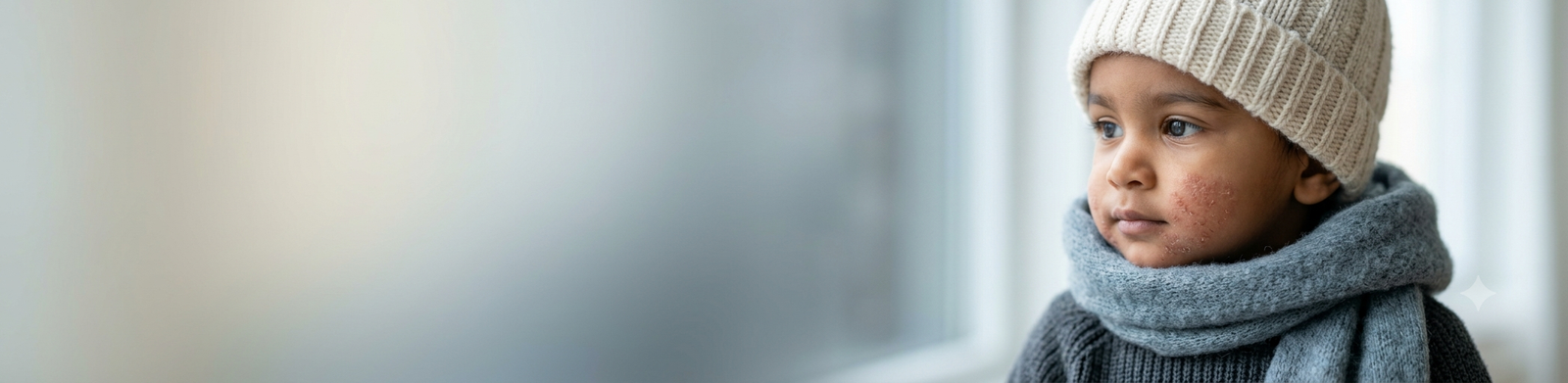




There is something lovely about dressing little ones in warm sweaters, wrapping them in soft blankets and watching their tiny cheeks turn rosy in the winter chill. But while the colder months bring their share of cosy moments, they can also leave delicate young skin feeling less comfortable. Dry cheeks, rough patches on the arms, itchy legs and unexpected rashes are common concerns parents notice as temperatures drop. Sometimes, these changes are simply signs of winter dryness. At other times, they may point towards eczema or another childhood skin condition that needs attention.
Children’s skin needs a little extra care, particularly during the colder months. At Aarna Clinic, Jayanagar, Bengaluru, Dr. Pavithra H.N., Dermatologist and Trichologist, provides paediatric dermatology consultations for babies and children experiencing skin concerns. Whether it is persistent dryness, recurring rashes or eczema flare-ups, consulting a paediatric dermatologist can help parents understand what their child’s skin needs and how to care for it gently.
Why Does Children’s Skin Become Drier During Winter?
A baby’s skin is delicate and still developing its natural protective barrier. Compared with adult skin, it can lose moisture more easily and may be more sensitive to environmental changes.
During winter, several factors can contribute to dryness:
- Low humidity: Cold, dry air can reduce moisture in the skin.
- Hot baths: Prolonged bathing in hot water can strip away natural oils.
- Indoor heating: Heaters and air conditioning can make indoor air drier.
- Heavy clothing: Multiple layers may cause sweating, friction and irritation.
- Harsh skincare products: Fragranced soaps, bubble baths and strong cleansers may aggravate sensitive skin.
For children who already have eczema or sensitive skin, these factors can make existing symptoms more noticeable.
Common Winter Skin Concerns in Babies and Children
Not every dry patch is eczema, and not every rash requires medication. Understanding some common childhood skin concerns can help parents decide when home care may be sufficient and when professional advice is needed.
1. Dry Skin and Rough Patches
Winter dryness is one of the most common skin complaints in babies and young children. Parents may notice roughness around the cheeks, elbows, knees, hands and legs.
The skin may appear slightly flaky, feel tight or develop small dry patches. In some cases, dryness can cause mild itching.
Gentle cleansing and regular moisturising can often help. However, if the skin becomes cracked, painful or persistently irritated, a dermatologist should evaluate it.
2. Eczema: When Dry Skin Becomes Itchy and Inflamed
Atopic dermatitis, commonly known as eczema, is a recurring inflammatory skin condition frequently seen during childhood. It can begin in infancy and may continue through different stages of childhood.
Common symptoms include:
- Dry, itchy patches that keep returning.
- Redness or changes in skin colour.
- Rough, scaly or thickened areas.
- Small cracks or irritated skin.
- Frequent scratching, particularly at night.
In babies, eczema commonly affects the cheeks, scalp and outer surfaces of the arms and legs. In older children, it may appear around the elbows, knees, wrists and neck.
Unlike ordinary winter dryness, eczema often follows a recurring pattern of flare-ups and improvement. Persistent itching can also interfere with sleep, playtime and everyday comfort.
3. Cradle Cap in Babies
Cradle cap is a common condition in infants that causes greasy, yellowish or white scales on the scalp. It is a form of infantile seborrheic dermatitis and is generally harmless.
Although it may look uncomfortable, cradle cap does not usually cause significant itching or pain.
Parents should avoid picking or scraping the scales. Gentle cleansing and suitable baby scalp-care products may help. If the condition spreads, becomes inflamed or develops signs of infection, seek medical advice.
4. Irritation Around the Cheeks and Mouth
Cold air, saliva, drooling and frequent wiping can irritate the delicate skin around a baby’s mouth and cheeks.
The area may appear red, rough or dry, particularly during teething when drooling increases.
Gently cleaning the area and applying a suitable fragrance-free barrier moisturiser may help protect the skin. Persistent irritation or broken skin should be evaluated.
When Should You Take Your Child to a Paediatric Dermatologist?
A little dryness during winter is usually manageable with appropriate skincare. However, certain symptoms suggest that your child may need a professional evaluation.
Consider consulting a paediatric dermatologist if:
- Dry patches continue despite regular moisturising.
- Your child scratches frequently or has difficulty sleeping.
- Rashes keep returning or spread to other body areas.
- The skin becomes cracked, painful or starts bleeding.
- Eczema symptoms interfere with daily activities.
- You notice unusual scaling, swelling or persistent inflammation.
Seek prompt medical attention if the affected skin develops pus-filled blisters, yellowish crusting, rapidly spreading redness or significant swelling. A rash accompanied by fever or a child who appears unusually unwell also needs prompt assessment.
A dermatologist can examine the affected areas, identify possible triggers and recommend age-appropriate treatment. Depending on the condition, this may involve moisturisers, prescribed topical medications or other targeted approaches.
Parents should avoid independently using adult skincare products, medicated creams or topical steroids on babies without medical guidance. Children’s skin requires treatment choices that account for their age, skin condition and overall health.
How Can Parents Protect Their Child’s Skin During Winter?
Winter skincare for children does not need to involve a complicated collection of products. A few gentle, consistent habits can make a meaningful difference.
1. Keep Bath Time Short and Comfortable
Long, hot baths may feel relaxing, but they can worsen skin dryness. Use lukewarm water and keep baths relatively short, ideally around five to ten minutes.
Choose a mild, fragrance-free cleanser and avoid excessive scrubbing. After bathing, gently pat the skin dry instead of rubbing it with a towel.
2. Moisturise Regularly
Moisturising is one of the most important parts of winter skincare for babies and children.
Choose a fragrance-free cream or ointment suitable for your child’s age and skin condition. Thicker moisturisers generally help retain moisture better than lighter lotions.
Apply moisturiser while the skin is still slightly damp after bathing. Children with dry or eczema-prone skin may need moisturising more frequently throughout the day.
3. Choose Soft, Breathable Clothing
Warmth is important, but too many layers can cause sweating and irritation.
Choose soft cotton clothing wherever possible, particularly for garments that come into direct contact with the skin. Avoid rough fabrics that may rub against dry or sensitive areas.
4. Be Careful With Soaps and Laundry Products
Strong fragrances, harsh detergents and fabric softeners may irritate sensitive skin.
Consider using fragrance-free laundry detergents and rinse clothing thoroughly. Wash new clothes before your child wears them to remove residual dyes and manufacturing finishes.
5. Maintain a Comfortable Indoor Environment
Indoor heating can make the air particularly dry. Maintain a comfortable room temperature and consider using a clean humidifier if the indoor air feels excessively dry.
Avoid placing babies too close to heaters or other direct heat sources.
Help Your Little One Enjoy Winter With Comfortable, Healthy Skin
Winter should be about warm cuddles, outdoor play, tiny sweaters and happy family moments, not constant itching or uncomfortable skin. While mild dryness is common during colder months, recurring rashes, persistent itching and eczema flare-ups deserve attention rather than repeated experimentation with skincare products.
At Aarna Clinic, Jayanagar, Bengaluru, Dr. Pavithra H.N. offers paediatric dermatology consultations for babies and children experiencing eczema, dry skin, rashes and other dermatological concerns. An individual assessment can help parents understand their child’s skin condition and follow a suitable care plan.
If your little one’s skin has become unusually dry, itchy or irritated this winter, consider booking an appointment with Dr. Pavithra H.N. at Aarna Clinic. With the right guidance and gentle everyday care, you can help protect your child’s delicate skin and make the colder months a little more comfortable.
FAQs About Winter Skin Care for Babies and Kids
At what age can a baby be taken to a paediatric dermatologist?
A baby can be evaluated by a dermatologist from infancy. There is no need to wait until a child is older if a persistent rash, unusual skin change or other dermatological concern develops.
Can babies develop eczema even if neither parent has it?
Yes. Although family history of eczema, asthma or allergies can increase the likelihood, babies can develop eczema even when neither parent has these conditions.
Does childhood eczema mean a child will have allergies later in life?
Not necessarily. Eczema can occur alongside allergic conditions, but having eczema does not mean a child will definitely develop food allergies, asthma or allergic rhinitis.
Should parents eliminate certain foods if their baby has eczema?
Not automatically. Food elimination is not routinely recommended for every child with eczema. Dietary changes should only be considered following medical evaluation, particularly if there are symptoms suggesting a food allergy.
Can eczema leave permanent marks on a child’s skin?
Repeated inflammation and scratching can sometimes cause temporary darkening or lightening of the affected areas. Persistent inflammation may also cause skin thickening. Appropriate treatment can help reduce these changes.
Is it safe to use natural or homemade remedies on a baby’s skin?
Not all natural ingredients are suitable for babies. Essential oils, herbal preparations and homemade mixtures may cause irritation or allergic reactions. It is safer to use age-appropriate products recommended by a healthcare professional.
Can children outgrow eczema?
Some children experience significant improvement as they grow older, while others continue to have occasional flare-ups into adolescence or adulthood. Regular skin care and appropriate treatment can help manage symptoms over time.