You wake up one morning, and there it is again – a painful bump near your jawline. Not a small pimple. Not something you can ignore. The kind that sits under the skin, hurts when you touch it, and refuses to disappear quickly.
What makes it more frustrating is the thought that keeps coming back:
“I’m not a teenager anymore. Why is this still happening?”
Adult acne feels unfair. You’re eating better, taking care of your skin, maybe even following a routine – yet breakouts keep returning at the same time every month, in the same areas, with the same intensity.
This is usually where hormonal acne enters the picture.
What makes hormonal acne different?
Hormonal acne doesn’t behave like regular acne.
- It doesn’t show up randomly.
- It doesn’t respond easily to face washes.
- And it rarely appears on the forehead or nose.
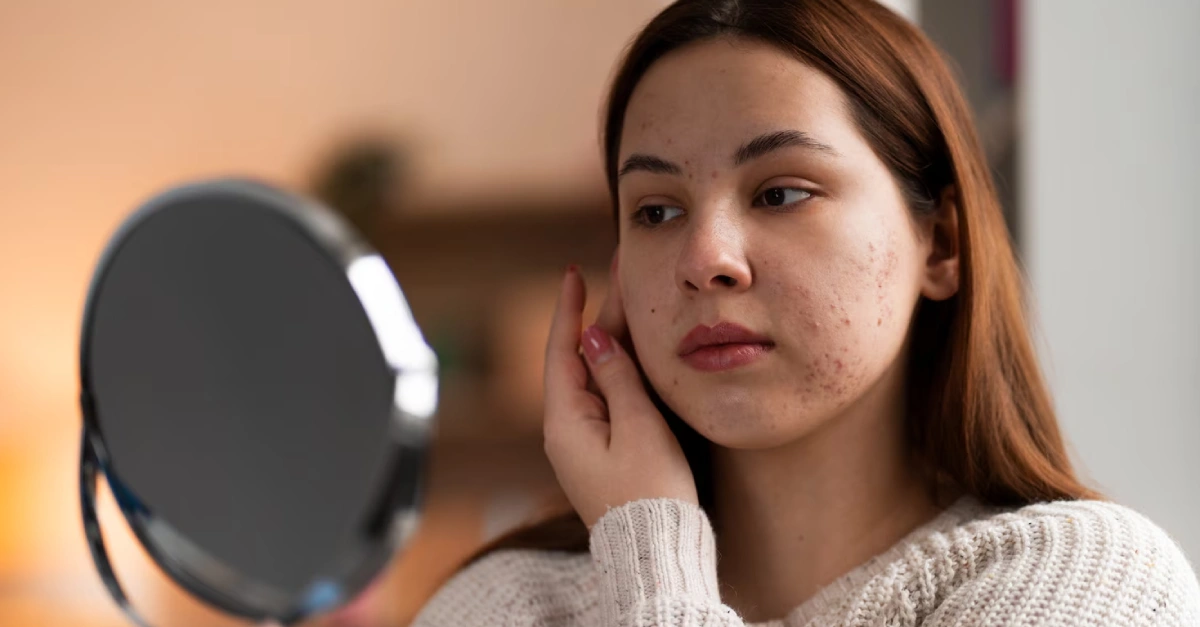
Instead, it shows up deeper – around the jawline, chin, cheeks, sometimes even the neck. These breakouts are often painful, cystic, and slow to heal. They feel like they come from within, because in many ways, they do.
Hormonal acne is not just a skin issue. It’s your body responding to internal hormonal fluctuations — something very common in adult women and even men.
Why hormonal acne happens?
Hormones play a powerful role in how our skin behaves.
Androgens — hormones present in both men and women — stimulate oil glands. When these hormones fluctuate or increase, the skin produces more sebum. Excess oil, combined with dead skin cells and bacteria, leads to clogged pores and inflammation.
But the trigger isn’t always obvious.
Hormonal acne can be caused by:
- Irregular menstrual cycles
- PCOS or hormonal imbalance
- Stress and high cortisol levels
- Sudden lifestyle changes
- Poor sleep patterns
- Certain medications
- Long-term digestive issues
Even emotional stress can influence hormones more than we realise. Many adults notice flare-ups during intense work periods, travel, or emotional burnout.
This is why hormonal acne often feels unpredictable — because it’s connected to more than just skincare.
Common signs of hormonal acne
Hormonal acne has a few very clear patterns.
It usually appears:
- Around the jawline and chin
- As deep, painful bumps
- In clusters rather than single pimples
- Right before or during periods
- Repeatedly in the same areas
These breakouts rarely come to a head quickly. They stay under the skin, feel tender, and sometimes leave pigmentation even after healing.
Another sign is persistence. If acne keeps returning despite using good skincare or changing products multiple times, hormones are often involved.
Why topical products alone don’t work
One of the most exhausting parts of hormonal acne is trying everything — face washes, serums, creams — and seeing little to no change.
That’s because hormonal acne doesn’t start on the surface.
While topical products help control oil and bacteria, they cannot correct internal hormonal signals. This is why people often feel stuck, believing nothing works.
Treating hormonal acne requires a balanced approach — addressing the skin externally while supporting the body internally.
Treatments that actually help hormonal acne
The goal of hormonal acne treatment isn’t to dry the skin aggressively. It’s to calm inflammation, regulate oil production, and prevent recurring breakouts.
Clinical treatments focus on:
Chemical peels
Gentle medical-grade peels help unclog pores, reduce inflammation, and control oil activity. They also help with post-acne marks that often follow hormonal breakouts.
Light-based and laser therapies
These reduce acne-causing bacteria, calm redness, and improve overall skin healing. They’re especially useful for people dealing with frequent flare-ups.
Skin barrier repair treatments
A damaged skin barrier often worsens hormonal acne. Treatments that restore hydration and balance make skin more resilient over time.
Targeted acne protocols
Rather than treating every breakout the same way, dermatology-based plans focus on the pattern, timing, and depth of acne — which is crucial for hormonal cases.
At clinics like Aarna Clinic, acne treatment is usually approached with a deeper understanding that adult acne needs consistency, not harshness. The idea is to reduce flare-ups gradually while protecting the skin from long-term damage.
Lifestyle support matters more than people think
Hormonal acne doesn’t improve with treatments alone if the body is constantly under stress.
Small changes often make a visible difference:
- Regular sleep cycles
- Managing stress levels
- Reducing excessive sugar and dairy (when advised)
- Staying hydrated
- Avoiding over-exfoliation
It’s not about perfection — it’s about stability. Skin loves routine, especially when hormones are involved.
The emotional side of adult acne
This part is rarely spoken about, but it matters.
Adult acne hits differently. It affects confidence, social plans, photographs, and sometimes even how we show up at work. It can make you feel like your skin doesn’t reflect who you are anymore.
Many people feel embarrassed seeking help, thinking acne is something they should have “outgrown.” But hormonal acne is extremely common — and completely treatable with the right guidance.
You’re not doing anything wrong. Your skin is simply asking for support.
Healing hormonal acne takes patience — and kindness
Unlike sudden breakouts, hormonal acne doesn’t disappear in a week. It improves in phases. Some months are better. Some need adjustment.
But with the right treatment plan, breakouts become less painful, less frequent, and easier to manage. Over time, skin begins to feel calmer — and that’s often the biggest relief.
- The aim isn’t flawless skin.
- It’s predictable skin.
- Skin that doesn’t surprise you every month.
A gentle conclusion
Hormonal acne in adults is not a failure of skincare — it’s a reflection of what’s happening inside the body.
Understanding its causes, recognising the signs early, and choosing treatments that respect your skin can change the journey completely.
With the right approach, patience, and professional care, hormonal acne doesn’t have to control your life — or your confidence.
Sometimes, healing isn’t about fighting your skin.
It’s about listening to it.